Quran Reading Online (Nazra): From Slow, Letter by Letter Reading to Smooth Reading
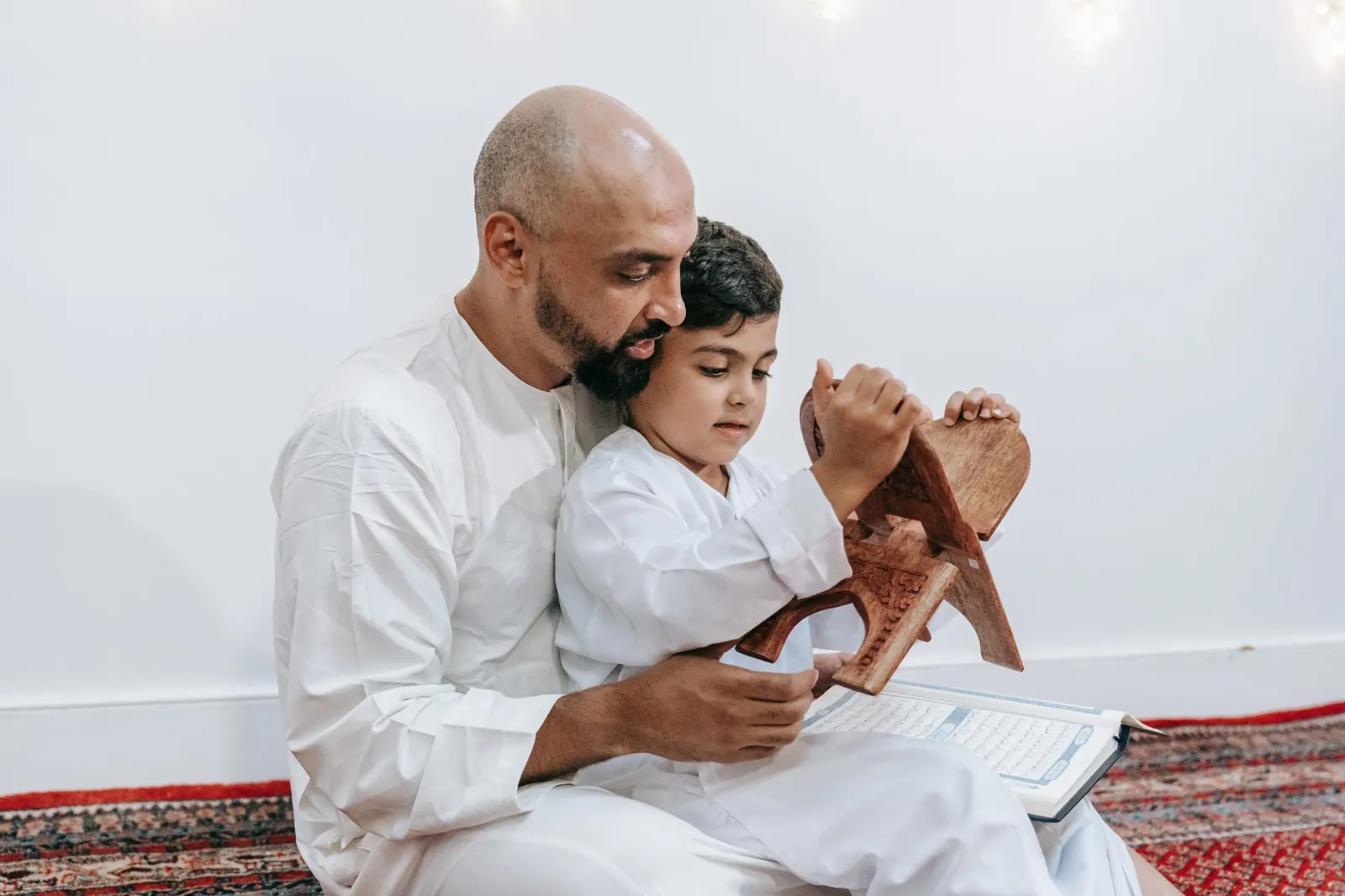
You know the letters. Then you open the Mushaf, stop at every word, whisper the sounds, lose your place and start again. That slow, tiring pace is what this Quran reading course is built to fix. Nazra means reading the Quran from the text, page by page, while a live teacher listens and corrects you. It suits kids and adults who finished Noorani Qaida or can read joined words slowly.
WhatsApp: +1 737 339 0845
| Detail | Hifzora Academy |
|---|---|
| Level | After Noorani Qaida |
| Entry check | A short read aloud with a teacher |
| Format | Live online lessons, one to one |
| Lesson length | 45 minutes |
| Duration | About 4 to 8 months at 5 classes a week |
| Translation included | No, translation is a separate course |
| Next step | Tajweed or Hifz |
What Is Nazra Quran Reading?
Nazra means reading the Quran aloud from the Mushaf, the written copy, not from memory. It comes after Noorani Qaida, the beginner book that teaches letters, short vowels and how letters join. In Nazra you read real ayahs, page by page, until your eyes and voice move together. The Quran itself asks for slow, measured recitation (Surah Al-Muzzammil, 73:4).
What Does “Fluent” Mean Here?
Fluent means you read a full page at a steady pace with the right vowels, stretches and stops, and you no longer spell out each letter. Accuracy comes first and speed follows. A small mistake that nobody fixes returns every time that letter appears, so we fix it the moment it happens.
Does This Sound Like Your Reading?
- You stop on almost every letter and repeat it before moving on.
- Letters with close sounds come out differently each time you read the same word.
- You finished Qaida, but a real page in the Mushaf feels like a new language.
- You read well at home and freeze when someone listens.
- Your child reads a little, and you cannot tell if it is right because you do not read Arabic yourself.
If two or more fit, a level check will show where to start.
Qaida, Nazra or Tajweed: Which Step Are You On?
| Noorani Qaida | Nazra | Tajweed | |
|---|---|---|---|
| Main goal | Learn letters, sounds and how they join | Read the Quran smoothly and correctly | Learn the rules of recitation in depth |
| You start when | You cannot read Arabic letters yet | You finished Qaida or read joined words slowly | You read smoothly and want rule accuracy |
| What you read | A beginner primer | The Mushaf, starting with short surahs | The Mushaf, with focus on the rules |
| You are done when | You read joined words with vowels | You read a page steadily with correct stops | You read with accurate sounds and rules |
If you cannot join letters yet, start with Noorani Qaida. If you already read smoothly and want the rules in depth, see our Tajweed course.
Who Can Join?
Kids and adults can join once they read joined Arabic words, even slowly.
Kids Who Have Finished Noorani Qaida
Reading level matters more than age. A child is usually ready when Qaida is done and they can sit through a short lesson. You do not need to read Arabic yourself. The teacher listens, checks the reading and tells you what to practise. Minimum age: 5. See our Quran classes for kids.
Adults and New Muslims
Many adults start with little or no Arabic. In a private lesson nobody else hears you, so you can read slowly and ask anything. The Prophet (peace be upon him) taught that a person who struggles to recite gets a double reward, as reported in Sahih al-Bukhari and Sahih Muslim. See our Quran classes for adults.
If You Cannot Read Letters Yet
Start with Noorani Qaida, then come back here.
Am I Ready, and How Is My Level Checked?
You are likely ready if you know the Arabic letters and can read a joined word with vowels, even slowly.
| Question | If yes | If no |
|---|---|---|
| Can you name and sound all Arabic letters? | Go to the next question | Start with Noorani Qaida |
| Can you read a joined word with vowels, even slowly? | Nazra is likely right for you | Start with Noorani Qaida |
| Do you stop on almost every letter? | Nazra is built for this | Ask about Tajweed |
A level check is a short call. You read a few lines aloud and the teacher listens for which letters and vowel signs you know, how you join letters, and where you stop or guess. The call takes about 10 minutes and a qualified teacher runs it.
How Can I Learn to Read Quran Online With a Live Teacher?
You join a live video lesson, open the same Mushaf page as your teacher, and read aloud while the teacher listens and corrects you. You need a phone, tablet or laptop with a camera and microphone, a steady connection and a Mushaf. Lessons run on Zoom, one to one, and a parent can sit in.
How Live Correction Works
- You read a line aloud.
- The teacher stops you at the mistake.
- The teacher says the word correctly, so you hear the difference.
- You read the whole line again.
Repeating the same error builds a habit that is hard to undo, so this loop runs inside every lesson.
Which Reading Mistakes Get Fixed in Class?
- Letters with close sounds said the same way.
- Short vowels cut off or stretched too long.
- Doubled letters (shaddah) read only once.
- Stop signs ignored, or stops taken in the wrong place.
- Word endings dropped when reading fast.
These slip in quietly, so a listener catches them faster than you can alone.
What Will I Practise in Each Lesson?
Continuous Reading
You move from single lines to half pages, then full pages, so your reading connects from word to word.
Breath and Stops
You learn where to pause and where to keep going, using the stopping signs (waqf) printed in the Mushaf, and how to breathe without breaking a word.
Word Flow
Joined letters, short vowels, doubled letters, the stop mark (sukun), the extra n sound on word endings (tanween) and stretched sounds (madd) get fixed as they appear in your reading. The full rules of Tajweed come later.
| Lesson step | What happens | Time |
|---|---|---|
| Warm up | You re-read the last lesson’s lines | 5 min |
| Teacher models | The teacher reads the new lines aloud | 8 min |
| You read | You read the new lines while the teacher listens | 12 min |
| Live correction | Stop, model, re-read the line | 12 min |
| Flow practice | You read the full passage without stopping | 6 min |
| Practice plan | You get what to read before the next class | 2 min |
What Are the Learning Milestones?
| Milestone | You can | Focus |
|---|---|---|
| 1 | Read short surahs word by word without spelling letters | Joined words |
| 2 | Read full ayahs with correct vowels and stretches | Accuracy |
| 3 | Pause at stop signs and restart correctly | Breath and stops |
| 4 | Read half a page at a steady pace | Word flow |
| 5 | Read a full page with few corrections | Fluency |
| 6 | Move to the next step | Tajweed or Hifz, once you read a full page with few corrections |
How Long Does It Take to Learn to Read the Quran?
It depends on your starting level, how often you take class and how much you practise. Published guides give very different ranges because they count different starting points, so ask for a level check before trusting any average. Short daily reading is easier to keep up than one long weekend session. Our expected range is about 4 to 8 months at 5 classes a week. Plans run 2, 3 or 5 classes a week, with 45 minute lessons.
Live Teacher, Videos, Apps or a Local Masjid: Which Fits?
| Option | Hears you read | Corrects you at once | Fits your schedule |
|---|---|---|---|
| Live online teacher | Yes | Yes | You pick slots |
| Free videos | No | No | Any time |
| Learning apps | Varies by app | Varies by app | Any time |
| Local masjid class | Yes | Yes | Fixed class times |
Free videos help you practise between lessons. A masjid class works well if a seat is open near you. Many families use two of these together.
When Are Classes Held for US Families?
- We teach in the four main US time zones: Eastern, Central, Mountain and Pacific.
- We offer after school, evening, weekend and early morning slots.
- Summer break and Ramadan often change a family’s routine, so tell us and we adjust your slots.
- Most US clocks go back one hour on Sunday, November 1, 2026. Most of Arizona and Hawaii do not change their clocks. Your class stays on your local clock.
What Comes After Nazra: Tajweed or Hifz?
The usual next step is Tajweed, which teaches letter sounds (makharij), stretches and stops in depth. Hifz, memorising the Quran, also needs clear, accurate reading first. We move you up when you read a full page with few corrections. See our Tajweed course.
Why Choose Our Quran Reading Course?
- You read to a live teacher in your first session and hear your level in plain words. The level check is free, with no card needed.
- Each lesson is built around your own reading, so correction comes while the mistake is fresh.
- You leave each lesson with a short written note and a clear next step.
- Lessons are taught by qualified teachers.
Quran Reading FAQs
What is Nazra Quran reading?
Nazra means reading the Quran aloud from the Mushaf, not from memory. It comes after Noorani Qaida, where you learn letters and vowels. In Nazra you read real ayahs, page by page, while a teacher fixes mistakes as they happen.
Do I need to know the Arabic alphabet first?
Yes, you should know the letters and the three short vowel signs first. If you cannot read letters yet, start with Noorani Qaida. If you can read joined words slowly, you are likely ready for Nazra. A short level check settles it.
Can adults learn to read the Quran from zero?
Yes. Many adults start with no Arabic and learn with steady practice. Private lessons help because nobody else hears your mistakes, and lessons begin at your level. Lessons are one to one.
What is the difference between Nazra and Tajweed?
Nazra is reading the Quran correctly and smoothly from the Mushaf. Tajweed is the detailed rule set: letter sounds, stretches and stops. Nazra teachers still fix wrong sounds as you read. Full Tajweed study comes next.
Can I read the Quran in English letters?
Many teachers advise learning the Arabic script instead, because English letters cannot show the real sounds, and one small error repeats each time.
What age can a child start Nazra?
Age matters less than reading level. A child who has finished Qaida and can sit for a short lesson is usually ready. Minimum age: 5.
Start With a Level Check
Book a level check and read a few lines with a teacher. You will hear where you stand and what to read next. See plans and fees when you are ready, or book a free trial.
Quran reading gets smoother when someone listens and corrects you early. A short level check shows where you stand and what to read next.
WhatsApp: +1 737 339 0845 | Email: fa6084431@gmail.com