Quranic Arabic: Understand the Ayahs You Recite, One to One
This Quranic Arabic course online teaches the Arabic of the Quran, so you can follow the ayahs you already recite. Lessons are live and one to one with a teacher. You start at your own level after a short level check. The course covers the Quran’s Arabic only. It does not teach everyday conversation.
Not sure where you stand? Book a free level check or message us on WhatsApp at +1 737 339 0845.
Email: fa6084431@gmail.com
WhatsApp: +1 737 339 0845
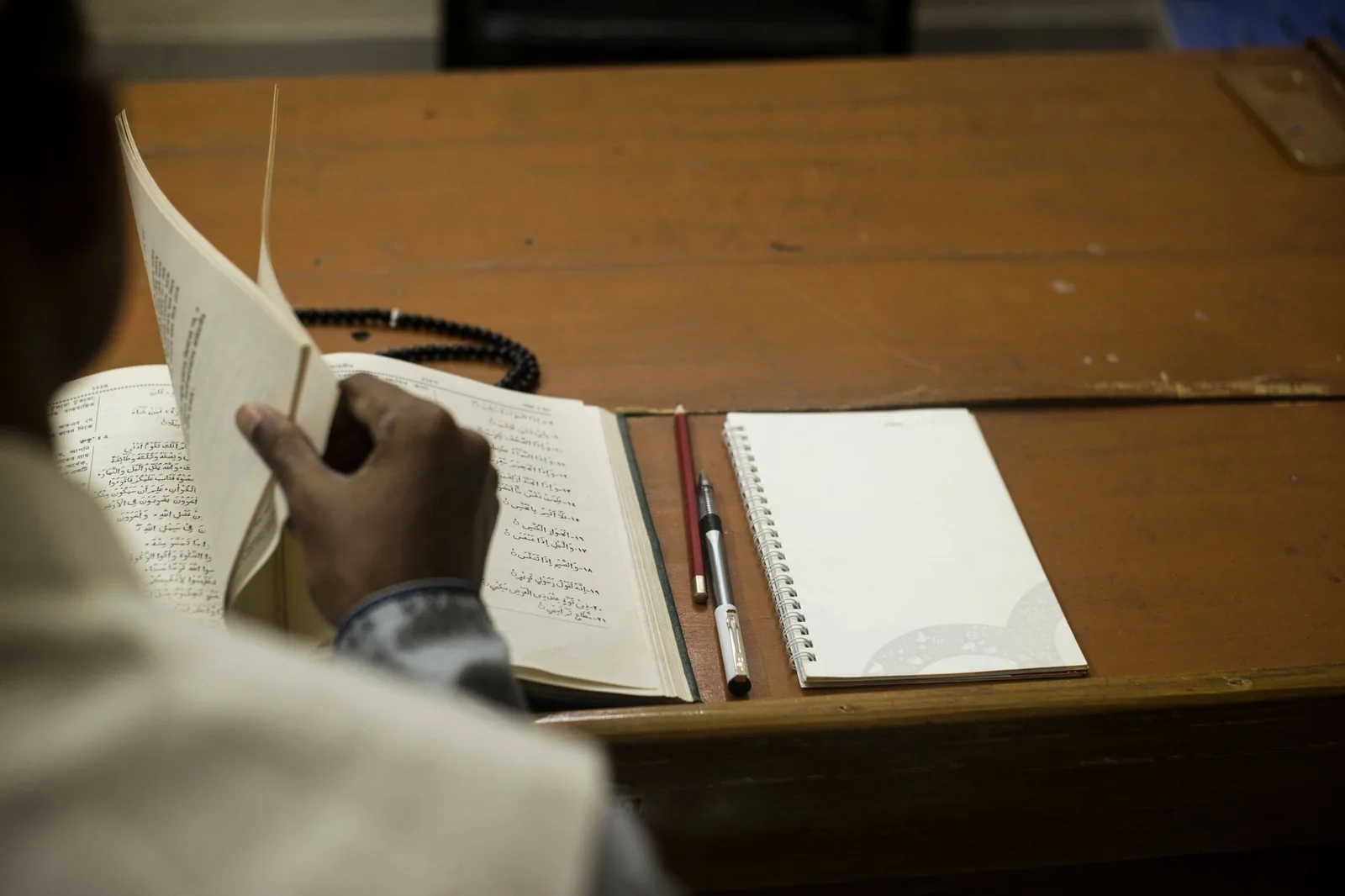
Many adults in the US recite every day and still feel the words are just sounds. That gap is common, and it can be closed. Surah Yusuf (12:2) says the Quran was sent down in Arabic so that people may understand it. Below: what you study, how a lesson runs, and how to start.
What Our Quranic Arabic Course Covers
You study three things: the words, how words change shape, and how sentences work. Every lesson uses real ayahs, never made-up lines.
Word Roots and Vocabulary
Most Arabic words grow from a root of three letters. Learn one root and you can spot a whole family of words. Take k, t, b, the root linked to writing. It gives kitab (book), kataba (he wrote), katib (writer) and maktub (written).
A corpus project from the University of Leeds tags each of the Quran’s 77,429 words with its grammar and root. We start with the words you meet most in short surahs and in salah.
Sarf and Nahw, Made Simple
Sarf shows how a word changes shape. Nahw shows how words work together in a sentence. Past and present verbs share a root, and sarf explains the pattern. Nahw tells you who did what, in a noun sentence or a verb sentence, and how two nouns join to show ownership (idafa).
Each rule gets one plain line, then an ayah.
Sarf
Sarf shows how a word changes shape.
Nahw
Nahw shows how words work together in a sentence.
I’rab and Verb Forms in Real Ayahs
I’rab means the case endings that mark the job of a word. Verb forms change the meaning, for example from doing an action to making someone else do it.
Juz Amma and the short surahs give you your first practice.
Who This Course Is For
This course fits adults who recite but want the meaning, new Muslims, and students who want to go past translation. Our Quran classes for adults page covers privacy and scheduling.
I Can Read the Quran but Do Not Understand It. Where Do I Start?
Start with the words you already recite most, such as those in Al-Fatiha and the short surahs. Learn their meanings and roots first. Then add basic grammar so you can see how the words fit together. A level check shows your exact starting point.
Do I Need to Read Arabic First?
You need to read Arabic letters with their vowel marks. If you cannot yet, begin with Noorani Qaida. If you can read the Quran, even slowly, you can begin with vocabulary and grammar here. A short level check before your first class confirms where to start.
Do I Need to Learn Modern Standard Arabic First?
No. You can study the Quran’s Arabic directly, because its vocabulary and grammar are the focus here. Modern Standard Arabic (MSA) helps if you also want modern reading or work use, since the two share most grammar. If your goal is the Quran, start here and add MSA later if you want it.
Can Adults and New Muslims Learn the Quran’s Arabic?
Yes. Steady practice matters more than talent, and one to one lessons let the pace fit your week. If you are new to Islam or only speak English, say so at your level check, and your teacher will begin where you are.
Your Level by Level Path
| Level | Who it is for | What you learn | What you can do at the end |
|---|---|---|---|
| 1. Core Words and Roots | Reads Arabic script, little grammar | Pronouns, particles, the most frequent Quranic words, the idea of roots | Recognize common words in Al-Fatiha and short surahs |
| 2. Word Forms and Sentence Basics | Finished Level 1 | Sarf basics, past and present verbs, noun and verb sentences | Split a short ayah into words and name what each word does |
| 3. Reading Ayahs With Grammar | Finished Level 2 | Nahw, i’rab basics, common verb forms | Read chosen passages word by word and explain the grammar |
Find your level in one short call. Start your level check.
How Different Is the Quran’s Arabic From Modern Arabic?
The Quran is written in Classical Arabic. Modern Standard Arabic comes from it and shares most of its grammar, as Wikipedia’s article on Arabic grammar notes. The gaps are mainly vocabulary and style: the Quran uses older words and full case endings. Spoken dialects differ much more than MSA does.
| Point | Classical (Quranic) Arabic | Modern Standard Arabic |
|---|---|---|
| Used in | The Quran and classical texts | News, books, formal speech |
| Grammar | Core rules shared with MSA | Largely the same |
| Words | Includes older words | Adds modern words |
| Short vowels | Marked in printed Quran copies | Usually left out |
| Best for | Understanding the Quran | Modern reading, work, travel |
Which Do You Need: This Course, Tajweed or Tafseer?
This course teaches what words mean and how sentences are built. Tajweed teaches how to recite correctly. Tafseer explains what ayahs mean in context, as scholars give it. They work together. Knowing the language makes Tafseer easier to follow, but it does not replace it. See our Tafseer and Translation course.
How to Learn the Quran’s Arabic With a Live Teacher
Start by reading Arabic script well. Next, learn the most common Quranic words and their roots. Then study sarf to see how words change and nahw to see how sentences work. Apply each rule to real ayahs with a teacher, and review for a few minutes every day.
What Happens in Your Quranic Arabic Lessons
A lesson has five parts: review last class, learn new words, study one grammar point, apply it to an ayah, and set short homework.
Your teacher fixes your pronunciation as you read.
Grammar, Step by Step
We teach words first, then sarf, then nahw, then i’rab. You need vocabulary before you can see patterns, so the order matters. Each step uses verse examples, short practice exercises, and a check from your teacher before you move on.
Can I Learn Quranic Vocabulary and Grammar Without a Teacher?
You can learn some vocabulary alone with apps and flashcards. A teacher helps most with pronunciation, grammar questions and checking your ayah analysis, which self study often misses. If you want steady correction and a clear path, live one to one lessons give you that.
Is 30 Minutes a Day Enough?
Thirty focused minutes a day is a workable base. Split it: ten minutes of word review, ten on grammar practice, and ten reading ayahs you have studied.
| Day | Task | Time |
|---|---|---|
| Class day | Live lesson | |
| Next day | Review new words with flashcards | 10 to 15 minutes |
| Mid-week | Find the week’s words in a short surah | 10 to 15 minutes |
| Weekend | Re-read the ayahs and list questions for your teacher | 15 to 20 minutes |
Live lesson
Review new words with flashcards
10 to 15 minutes
Find the week’s words in a short surah
10 to 15 minutes
Re-read the ayahs and list questions for your teacher
15 to 20 minutes
How Long Until You Can Follow the Ayahs?
It depends on where you start, how many minutes you study each day, and how often a teacher corrects you. Progress comes in steps. Plan in months, not weeks.
We do not promise fluent speech or every ayah. We help you know common words, see how sentences work, and read short passages.
Can I Understand the Quran in Six Months?
Not fully, and be careful with any academy that says you can. Six months can give you common words, basic sentence structure and some short passages. Ask any academy for its level outcomes and its time range in writing.
Live Classes That Fit Your US Schedule
What Time Zones Do You Cover?
We teach learners across the US in Eastern, Central, Mountain and Pacific time. Classes are live and booked in your local time.
What Happens When the Clocks Change?
Daylight saving time in the US ends on November 1 in 2026, according to NIST. Your slot stays fixed in your own local time, so a 7 pm class stays at 7 pm. Tell us your time zone when you book, and we will keep it on your calendar.
Pick a time that suits your week. Reserve your slot.
What to Ask Any Teacher Before You Enroll
Ask these of any academy, including ours:
- What will the first eight weeks cover?
- How do you correct my pronunciation?
- Are reading and grammar taught separately?
- How much review do I do between classes?
- How do you measure my progress?
If you prefer a female teacher, ask at the start.
Start Learning Quranic Arabic With a Level Check
- Book your free level check. It takes a few minutes.
- Meet your teacher and set your starting level.
- Get your plan, then compare plans and fees.
Prefer to talk first? WhatsApp us at +1 737 339 0845.
Email: fa6084431@gmail.com
Browse all Quran courses.
Frequently Asked Questions
How to learn Quranic Arabic?
Start with reading Arabic script. Then learn the most common words and their roots, study sarf and nahw, and apply each rule to real ayahs with a teacher. Review a few minutes every day. This order builds vocabulary before grammar, so the patterns make sense when you meet them.
How different is Quranic Arabic from modern Arabic?
The Quran uses Classical Arabic. Modern Standard Arabic comes from it and shares most of its grammar. The main gaps are older words, full case endings and style. Spoken dialects differ much more. A learner of Modern Standard Arabic still needs time with Quranic words.
How long does it take to learn Quranic Arabic?
It depends on your starting level, your daily study time and how often a teacher corrects you. Plan in months, not weeks. Most learners first recognize common words, then basic grammar, then short surahs with help. Your teacher gives a range after your level check.
Will this help me understand my salah?
Yes, it can. Many words in your daily prayers appear again and again across the Quran. Learning common vocabulary and basic grammar helps you follow what you recite in salah. It will not teach prayer rulings. For those, ask your imam or a qualified teacher.
What happens in the first lesson?
Your teacher listens to you read, checks the Arabic you already know, and sets a starting level. You then try a short lesson on common words. Afterward you get a suggested plan. Bring a Quran you read from.
How much do these classes cost?
Fees depend on lesson length and how many classes you take each week. All plans sit in one table on the pricing page, so you can compare fairly. Before you enroll, check what is included, such as progress reports and make-up classes.