Learn Tajweed Online: Recite the Quran Clearly with Live Correction
Live tajweed lessons with a teacher who hears every mistake and fixes it on the spot.
WhatsApp: +1 737 339 0845
Email: fa6084431@gmail.com
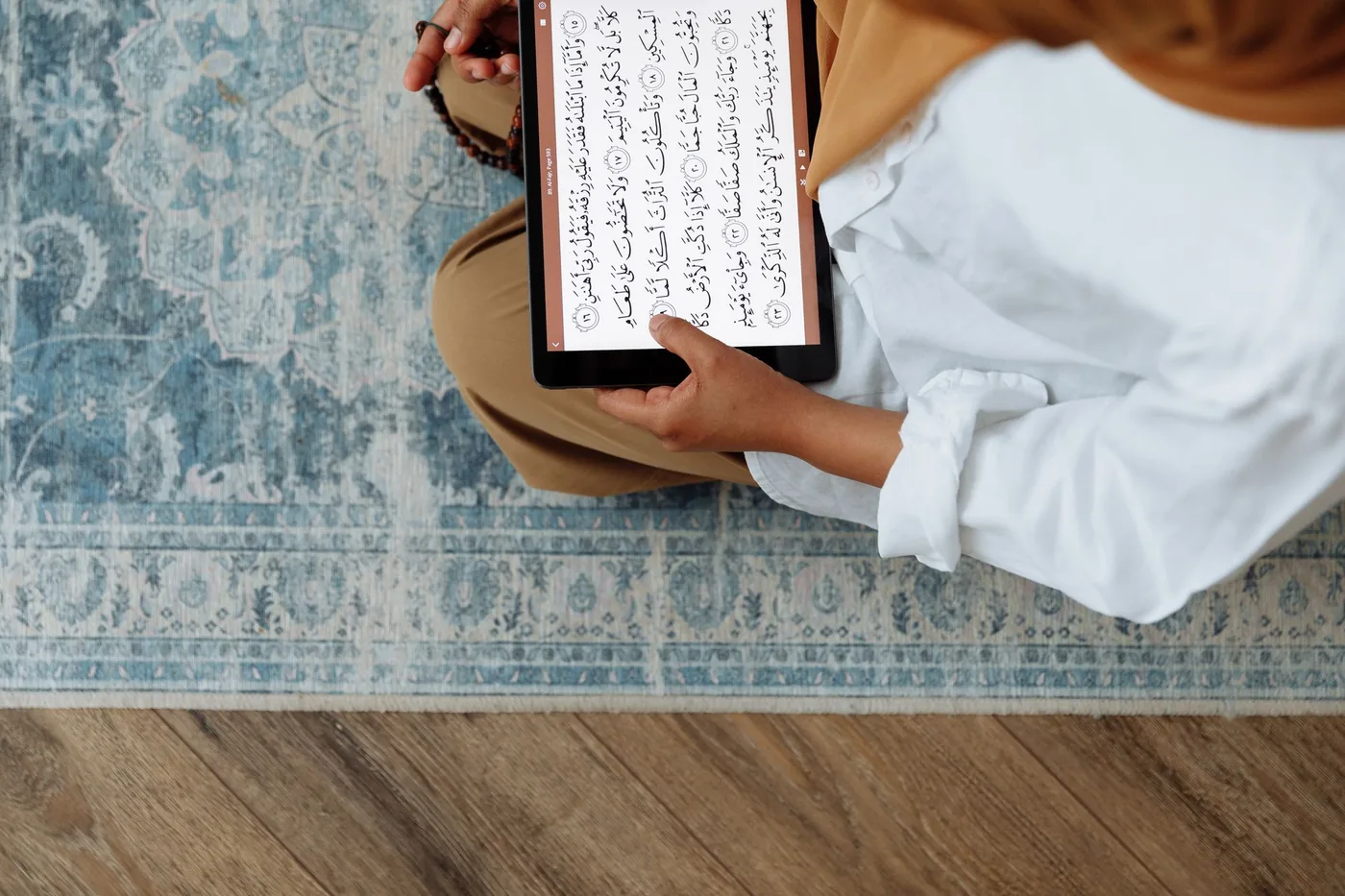
Tajweed is what turns reading the Quran into reciting it correctly. If you can already read Arabic letters but still stumble, stretch the wrong sounds or stop in the wrong place, a live teacher can hear that and fix it. This page shows what you learn, how a lesson works, and how to start.
What Is Tajweed and Why Does It Matter?
Tajweed is the set of rules for reciting the Quran correctly. It covers where each letter is pronounced, how long to stretch sounds, and where to pause. Learning tajweed helps you read each word clearly, the way it has been taught and passed down.
Tajweed is not only for scholars or imams. Anyone who recites the Quran can learn it. The Prophet (peace be upon him) said the skilled reciter will be with the honored and obedient angels, and the one who finds it hard but keeps trying earns a double reward (Sahih al-Bukhari and Sahih Muslim). Most students do not notice their own small mistakes, which is why a second set of ears helps.
| Common mistake | Rule area that fixes it |
|---|---|
| Mixing up letters that sound close | Makharij, the exit point of each letter |
| Stretching a sound too short or too long | Madd |
| Stopping or restarting in the wrong place | Waqf and ibtida |
Stopping in the wrong place can change what a sentence means. In English, ‘Let’s eat, Grandma’ and ‘Let’s eat Grandma’ use the same words. The Quran has stopping and restarting rules for the same reason. If you want the rules in detail, read our guide to tajweed rules explained.
Who Our Online Tajweed Classes Are For
Our online tajweed classes are for students who can read Arabic letters and want to recite correctly. You may be:
An adult who reads the Quran but never learned the rules.
A parent who wants a child who already reads to recite properly. See our Quran classes for kids.
A student who learned years ago and wants a teacher to check your recitation.
A sister who prefers a female teacher. See classes for sisters.
Maybe reading a page takes a long time and you still feel unsure. Maybe you feel shy reciting in front of people, or there is no qualified teacher near you. One to one lessons are private, so you can make mistakes without an audience.
| Where you are now | Best next step |
|---|---|
| I cannot read Arabic letters yet | Noorani Qaida |
| I read slowly and need practice | Quran reading classes |
| I read fluently but never learned the rules | Tajweed, this page |
| I want to memorise the Quran | Read clearly first, then Hifz |
Why do I read so slowly and still make mistakes?
Slow reading with mistakes usually means the rules are not automatic yet, or old habits were never corrected. A teacher listens, finds the pattern behind your errors, and gives short drills for it. Speed comes after accuracy.
Can You Learn Tajweed Without a Teacher?
You can learn the rules from videos, apps or a colour coded Quran. Many people start that way, and it works for understanding what the rules are.
The problem is that a video cannot hear you. If you stretch a sound too short or pronounce a letter from the wrong place, you will not catch it yourself. You may practise the same mistake for months.
A live teacher adds three things:
- Someone who listens to your recitation and names the mistake.
- A plan that starts at your level, not at page one.
- A reason to practise regularly, because the next lesson is coming.
Many students use both. Videos explain the rules, and the teacher checks that you apply them.
Do I need a teacher if I already use a colour coded Quran?
A colour coded Quran shows you where a rule applies. It cannot tell you whether you said the sound correctly. A teacher listens to your pronunciation and corrects it, so use the colours to learn and the teacher to check.
Tajweed for Beginners Online: Where We Start
In our lessons, a beginner means a student who can read Arabic letters but has not learned the rules. If you cannot read letters yet, start with Noorani Qaida first.
Tajweed Course Outline: What You Learn Level by Level
The course has three levels. You move on when you pass the exit check for your level, not on a fixed date.
| Level | What you learn | You practise on | Exit check |
|---|---|---|---|
| 1 | Letter sounds and Makharij | Short passages | Recite a short passage with correct letter sounds |
| 2 | Noon and Meem Sakinah, Ghunnah | Short surahs | Name each rule and apply it while reciting |
| 3 | Madd, Qalqalah, heavy and light letters, Waqf and ibtida | Longer passages | Recite a full page applying all rules |
Here is what the main rules mean in plain words:
- Meem Sakinah has three rules, decided by the letter that comes after the meem.
- Ghunnah is the nasal sound.
- Madd means stretching a sound for the right length.
- Qalqalah is a light echo on certain letters when they have no vowel.
- Heavy and light letters (tafkhim and tarqiq) change how full a sound is.
What are the four rules of noon sakinah?
The four rules are izhar (say the noon clearly), idgham (merge it into the next letter), iqlab (turn it into a meem) and ikhfa (hide it in the nose). The letter that comes after the noon decides which rule applies. Your teacher drills each one with Quran examples until you can hear the difference.
What does waqf mean in tajweed?
Waqf means stopping while you recite, and ibtida means where you start again. A pause in the wrong place can change the meaning of a verse. The pause signs in the Mushaf guide you, and your teacher shows you where each one applies.
How Live Correction Works in Every Lesson
Most sites say ‘live classes’ and stop there. Here is what actually happens:
- Level check. In your first class, your teacher listens to you recite and notes your mistakes.
- Your plan. You get a plan that starts at your level and names what to fix first.
- Recite and correct. You recite. Your teacher stops you at a mistake, names it, and has you repeat until it is right.
- Practice task. You leave with a short task to practise before the next lesson.
- Recheck. The next lesson starts by checking that task.
- Progress notes. You see what improved and what is next.
How Long Does It Take to Learn Tajweed?
Most learners need several months of steady practice to get the basic rules right. The exact time depends on:
- How well you read today.
- How many lessons you take each week.
- How much you practise between lessons.
- Your age and how often you can attend.
We do not promise a number of weeks. After your level check, your teacher gives you a realistic range.
How to Choose the Best Online Tajweed Course
Before you pay for any tajweed course, ask these questions:
| Ask this | Why it matters |
|---|---|
| Is the teacher live, or is it recorded? | Recorded lessons cannot hear your mistakes |
| Who are the teachers and what did they study? | Rules must be taught correctly |
| Is there a level check first? | A plan should start where you are |
| What can I do at the end of each level? | You should know what progress means |
| How will I see my progress? | You need to know what to practise |
| Is the price clear? | Hidden fees cause trouble later |
| Can I try before I pay? | You should meet the teacher first |
Class Times for Students in the USA
We teach students across the USA in Eastern, Central, Mountain and Pacific time.
Many students pick evenings after school or work, or weekends.
See online Quran classes in the USA for scheduling details, and pricing for plans.
Your Free Trial Class, Step by Step
- Fill in the form or call or text +1 737 339 0845.
- Pick a time in your own time zone.
- Meet your teacher. You recite, and the teacher checks your level.
- Get your plan. There is no obligation to continue.
Email: fa6084431@gmail.com
For children, a parent can sit in.
Tajweed Course FAQs
How long does it take to learn tajweed?
Most learners need several months of steady practice for the basic rules. Your time depends on how well you read now and how often you practise. After a level check in your trial class, your teacher gives you a plan with a realistic timeline.
Can I learn tajweed from YouTube or without a teacher?
You can learn the rules from videos or a colour coded Quran. But a video cannot hear you. A live teacher hears wrong sounds, wrong stretching and wrong stops, then fixes them on the spot. Many learners use videos for the rules and a teacher for correction.
Do I need to know Arabic before I start?
You need to read the Arabic letters. You do not need to understand the meaning. If you cannot read letters yet, start with Noorani Qaida, then move to tajweed.
Is there a free online tajweed course?
Free videos and apps can teach the basics, but they do not give you a teacher who listens. We offer a trial class so you can see live correction first. Paid lessons start only if you choose to continue.
What is the difference between Nazra and Tajweed?
Nazra means reading the Quran from the Mushaf. Tajweed adds the rules for pronouncing, stretching and stopping correctly. Read Nazra first, then add tajweed so your recitation is accurate. See Quran reading classes.
Ready to Recite with Confidence?
If you want tajweed taught by a live teacher who listens and corrects, book a trial class. You can also call or text +1 737 339 0845.
Email: fa6084431@gmail.com
References: Tajwid, Wikipedia. Sahih al-Bukhari and Sahih Muslim on the reward of the skilled reciter.