Quran Tafseer Classes Online: Understand What You Recite
You read the same surah every night and you still cannot tell a friend what it means. That is the gap our online Quran tafseer course closes. In live one to one lessons, a teacher walks through the ayah with you word by word, gives you the story behind it, and tells you what classical scholars took from it. You leave each class able to explain the verse in your own words, not just recite it.
WhatsApp: +1 737 339 0845
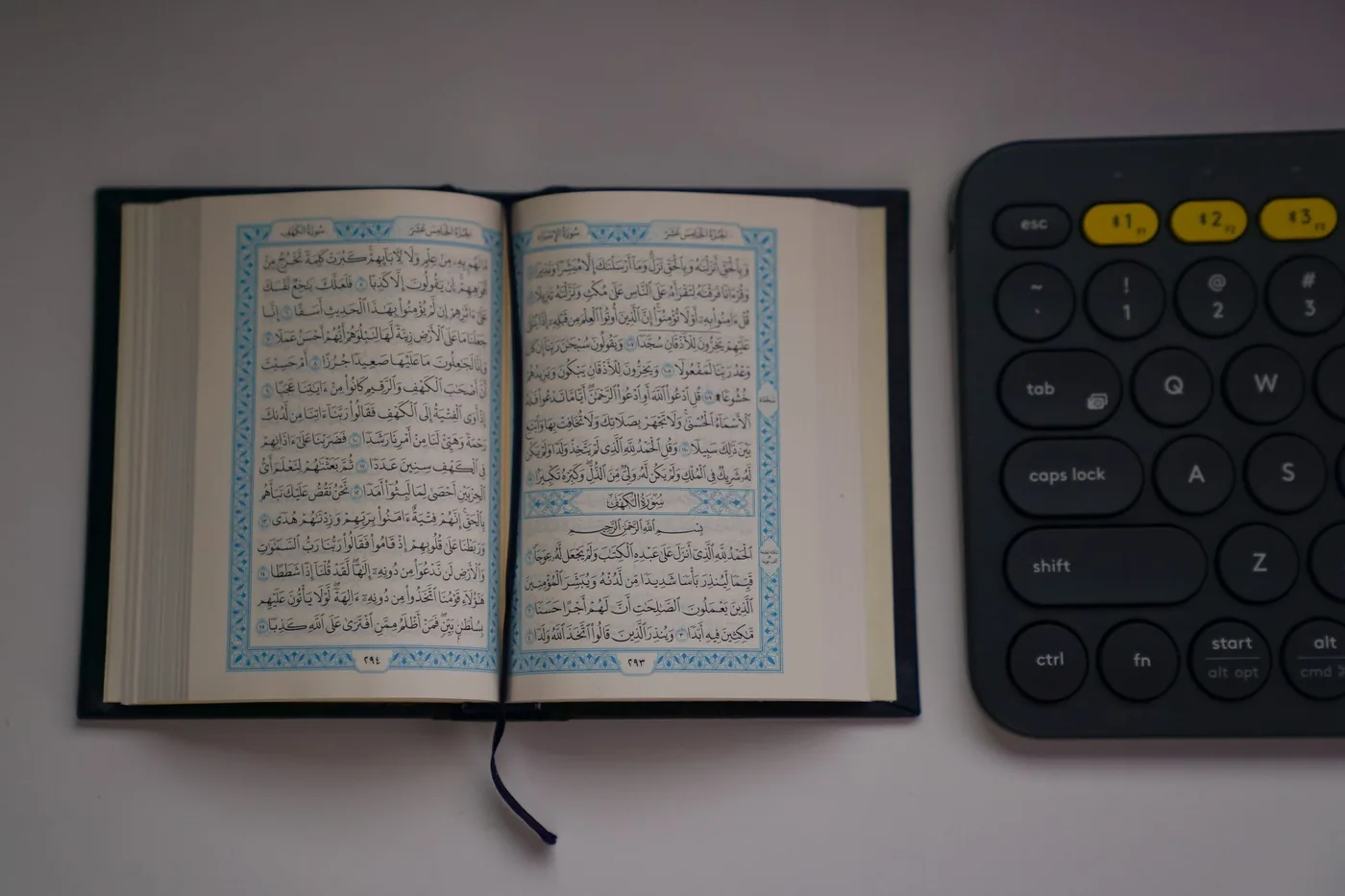
Most people who search for this do not want a lecture. They want to stop feeling lost. If you have ever sat in prayer saying words you cannot translate, or told your kids “I’ll explain that later” and never did, this course is built for exactly that moment.
Classes run live, one teacher to one student, at times that work around US school pickup, work shifts, and evening routines.
What will I learn in this online Quran tafseer course?
Short answer: you learn what each word means, why the verse was revealed, what scholars explained about it, and what it asks of you. Every lesson moves through the same four layers so you are never guessing what comes next.
The meaning of each word.
Your teacher reads the Arabic aloud, then gives you the meaning of every word in plain English, not a loose paraphrase.
The story behind the verse.
This is asbab al-nuzul, the occasion of revelation. Your teacher shares it where it is reliably reported, and tells you whether the surah is Makki or Madani, which changes how a verse is read.
What classical scholars explained.
You hear the actual tafseer, in language built for someone who did not grow up reading Islamic texts.
What it asks of you.
Every passage closes with what it means for your prayer, your character, or your household, not just history.
“Is tafsir just the meaning of words, or something more?”
This is a real search people run, and the honest answer is: tafsir is more than word meaning. Word meaning is step one. Tafsir adds context, grammar, and what scholars across centuries understood from the verse. A course that only gives you word meaning is teaching translation, not tafsir, and several academy pages blur this line. We do not.
| Detail | Hifzora Academy |
|---|---|
| Format | Live, one to one, online |
| US time zones covered | ET, CT, MT, PT |
Word by word translation vs tafseer: what is the actual difference?
Word by word translation gives you the meaning of each Arabic word on its own. A full translation strings those meanings into a readable English sentence. Tafseer goes further and explains why the ayah came, how scholars read it, and what it teaches. You need the first two before the third makes sense.
Tafsir is formally defined as a commentary or exegesis of the Quran. Scholars split it into two broad kinds: tafsir bi al mathur, built on transmitted reports from the Prophet and the early generations, and tafsir bi al ra’y, built on reasoned scholarly explanation. Your teacher tells you which kind a given explanation falls under, so you are never left wondering if it is a report or an opinion.
| Word by word translation | Full English translation | Tafseer | Quranic Arabic | |
|---|---|---|---|---|
| What it gives you | Meaning of each word | Meaning of the full verse | Context, language, scholarly explanation | Grammar, word roots, sentence structure |
| Question it answers | What does this word mean | What is this verse saying | Why was it revealed and what does it teach | How is Arabic built as a language |
| Best for | Following along as you read | A first pass through a surah | Real understanding you can explain to others | Long term study, reading unaided |
| Where to study it here | This course | This course | This course | Quranic Arabic course |
Can a translation alone explain the Quran?
No, and the people who translated the Quran into English said so themselves. Marmaduke Pickthall titled his 1930 translation The Meaning of the Glorious Koran: An Explanatory Translation, not simply “The Quran in English.” Arthur Arberry called his 1955 edition The Koran Interpreted. Both chose that wording on purpose. A translation carries meaning across. It does not carry the full weight of context, grammar nuance, or centuries of scholarship. That weight is what tafseer adds.
Tafseer vs tadabbur, in one paragraph
Tafseer checks that your basic understanding of the ayah is correct. Tadabbur, or reflection, is what you do after that understanding is solid, thinking through what the verse means for your own life and choices. Skipping to reflection before the understanding is settled is how people end up with sincere but incorrect conclusions. We teach tafseer first, and leave real room for tadabbur once the meaning is clear.
Can I study Quran tafseer in English, with no Arabic speaking required?
Yes. Every explanation in this course is given in English, so you follow without needing to speak Arabic yourself. This is built for American born kids who understand English faster than Arabic, for converts who can read the script but did not grow up with the language, and for adults who simply think in English.
“Do I need to know Arabic to join?”
You do not need to speak Arabic. You do need to be able to read the Arabic text itself. If reading is still shaky, our Quran Reading course builds that first, and you come back here once it is solid.
“Why do two English translations of the same verse read differently?”
Arabic words can carry more than one shade of meaning, and a single root word can branch into several valid English choices. One translator stays literal, another explains more. Neither is wrong on its own, but comparing them side by side, with a teacher, is where real understanding starts. This is one of the most searched questions about Quran translation, and it has a real answer, not a vague one.
Who is this course actually for?
This course fits anyone who can already read the Quran and wants to know what they are reading. It does not fit someone who cannot yet read Arabic letters smoothly, and we will tell you that honestly rather than enroll you into a course you are not ready for.
Adults who recite daily but cannot explain what they just read. Lessons are private, so you can ask the question you have been embarrassed to ask anyone else.
Parents raising kids who memorized surahs without understanding them. After school slots exist for this exact reason.
New Muslims who can read the script but have no background yet. Nothing is assumed about prior knowledge.
Hifz students who want their memorization to mean something. Understanding what you have memorized changes how it stays with you.
Who should start somewhere else first?
If letters and words are still a struggle, start with Quran Reading, not this course. If your goal is grammar, roots, and reading Arabic unaided long term, our Quranic Arabic course is the better fit. This course is about meaning. It assumes you can already get through the verse on your own.
| Where you are | Start with |
|---|---|
| Cannot read Arabic letters yet | Noorani Qaida |
| Reads slowly, makes mistakes | Quran Reading (Nazra) |
| Reads well, wants the meaning | This course, Tafseer and Translation |
| Wants to learn Arabic grammar itself | Quranic Arabic |
How does a live one to one tafseer lesson actually run?
Every class follows four steps in order: read, understand the words, learn the context and explanation, then reflect and ask. You are on video with your teacher the entire time. Nobody else sits in on your lesson.
- Before class. You book a time inside your US time zone, and your teacher shares which passage is next.
- During class. The teacher reads the ayahs with you, gives word meanings, explains the context and what scholars said about it, then opens the floor for your questions. If something does not land, they slow down and repeat it, the same way a patient teacher would in person.
- After class. You get a short review task to keep the lesson from fading by next week.
Which tafseer books does this course teach from?
For reference, some classical works used widely across English language tafseer study include Tafsir al Jalalayn, which Jalal ad Din al Mahalli began and Jalal ad Din as Suyuti completed, compact enough to sit in one volume.
How does a teacher handle verses where scholars disagreed?
Some ayahs have more than one scholarly reading. Your teacher presents the explanation taught in class and tells you plainly when another view exists. For matters of religious ruling specifically, we point students to their own qualified local scholar rather than issuing one ourselves on this page.
Levels, duration, and real US class times
You are placed into a level after a short check during your trial class, not guessed at blind.
Classes are offered across Eastern, Central, Mountain, and Pacific time, including after school and after work slots built around how American families and working adults actually schedule their day.
What comes after Tafseer and Translation?
Most students reach tafseer once they already read fluently. From here, the natural next steps are Tajweed, to sharpen recitation, or Quranic Arabic, to go deeper into the language itself rather than relying on a teacher’s explanation every time.
Start with a free trial class
One class, no pressure, so you can see how it feels to have someone actually explain the verse back to you. Pricing for ongoing classes lives on our Pricing page, not buried in fine print here.
Frequently asked questions
What is tafsir of the Quran?
Tafsir means explanation. It studies what an ayah says, when and why it was revealed, how the Arabic works, and how classical scholars understood it. Translation gives you the meaning. Tafsir adds the reasoning behind it.
What is the difference between Quran translation and tafseer?
Translation turns the Arabic into English. Tafseer explains the context, the language, and what scholars took from the verse. You generally need the translation first to follow the tafseer that comes after it.
Should I read a translation or a tafseer first?
Most beginners start with a clear translation, then layer in tafseer one surah at a time. A teacher sets the pace and recommends books suited to where you are.
Can the Quran be translated?
Its meaning can be rendered into English, and the translators themselves describe their work as exactly that, a rendering of meaning. The Arabic text remains the Quran itself. This is a large part of why a teacher and tafseer matter.
Are English translations of the Quran accurate?
Established translations stay close to the meaning, but every translator still makes word choices, because no two languages map onto each other perfectly. None of them replace the Arabic. Tafseer helps you see exactly where a word choice is doing real work.
What is the best English translation of the Quran?
There is no single best one, it depends on your reading level and your goal. Your teacher can recommend one suited to you specifically.
How many tafseer of the Quran exist?
Thousands. Samuel Ross, writing in the Journal of Qur’anic Studies in 2023, counts roughly 2,700 unique tafsir titles that survive in manuscript form. As of 2003, only about 300 of those had been edited and published.
Do I need to know Arabic to join this course?
You do not need to speak Arabic. You do need to be able to read the Arabic text. If reading is not solid yet, start with Quran Reading first.
Can I just study tafseer on my own, without a teacher?
Plenty of people start with a book or an app on their own. A teacher adds context, answers your specific questions, and flags where scholarly views genuinely differ. For any question of religious ruling, we point you to a qualified local scholar rather than answering it here.
Is memorizing or understanding tafsir more important?
Both matter, and the honest answer most teachers give is that you balance the two rather than pick one. Understanding what you have memorized is part of what makes memorization stay with you long term.
Is there a free online Quran tafseer course option?
You can start with a free trial class. Regular ongoing classes are paid, and pricing sits on our dedicated Pricing page rather than this one.
You already recite it. Now understand it.
If you read the Quran every day but could not explain the last verse you recited, that is exactly the gap this course exists to close. Book a free trial, meet your teacher, and find out where you actually stand.
WhatsApp: +1 737 339 0845 | Email: fa6084431@gmail.com