Quran Classes for Kids Online: Patient One to One Lessons from Age 4
Finding online Quran classes for kids that fit a school week is hard. Your child is tired after school, practice runs late, and there may be no masjid class nearby. We teach live, one to one lessons online. Your child learns from home, with a teacher who stays patient while they learn to read.
WhatsApp: +1 737 339 0845
| Detail | Value |
|---|---|
| Ages | From 4 |
| Lesson | 30 minutes |
| Format | Live, one to one, online |
| Teacher | Same teacher each week. Female teacher on request |
| Parents | Can sit in |
| Trial | Free 3 day trial |
| Times | After school and weekends, all four main US time zones |
What will my child learn in Quran classes?
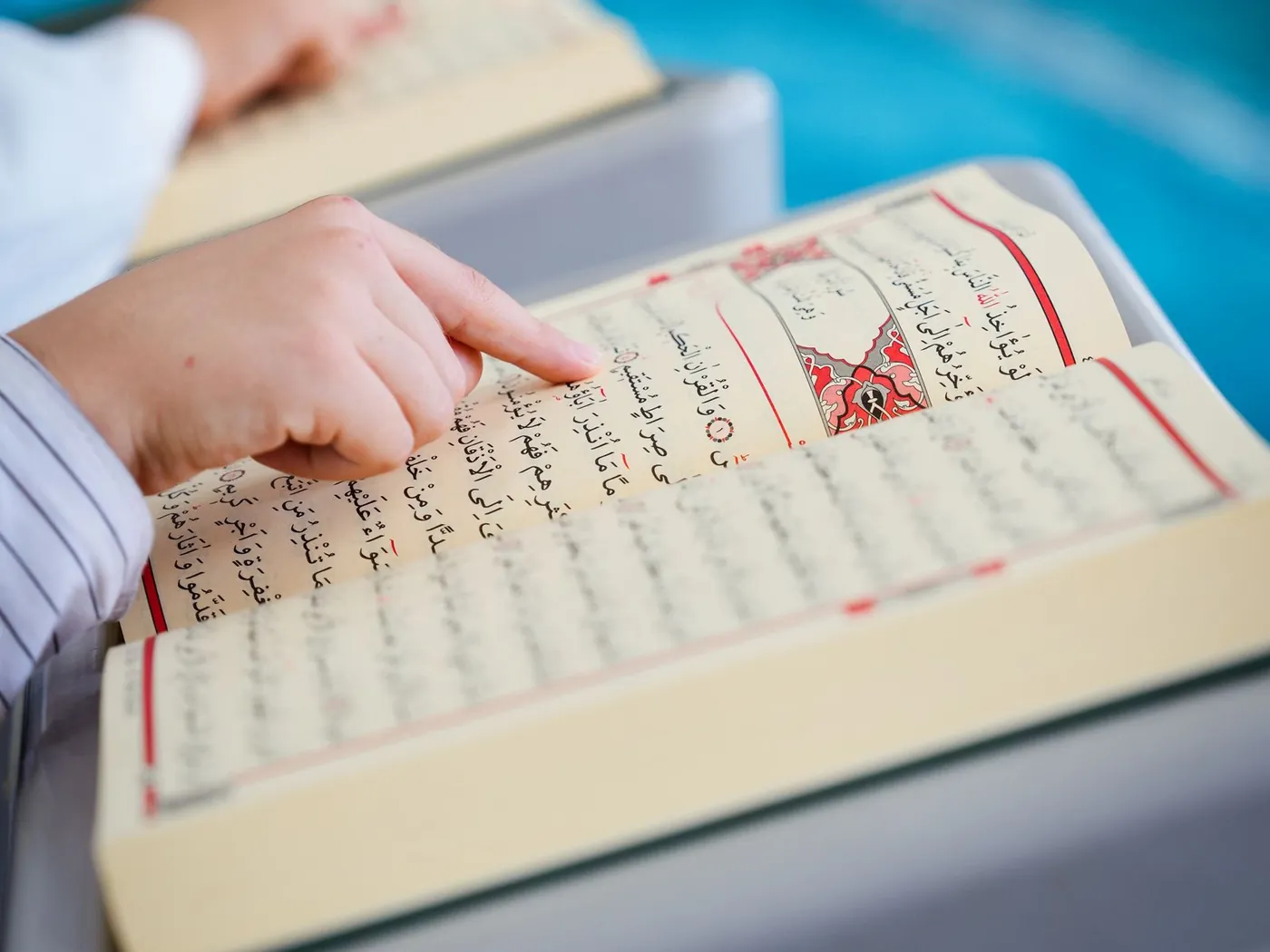
Your child learns to read the Quran correctly, one step at a time. Most children begin with Noorani Qaida, a beginner book that teaches Arabic letters and their sounds. Next comes reading with the basics of Tajweed, then short surahs by heart. Quran for kids online starts with sounds, not surahs. Where your child starts depends on what they already know.
- Arabic letters and sounds, including letters that look alike, in our Noorani Qaida classes
- Short vowels (fatha, kasra, damma) that turn letters into syllables
- Words, then lines, then surahs, starting with Al-Fatiha, in Quran reading
- Tajweed basics. The Pluralism Project at Harvard explains that tajwid means “making beautiful” and sets rules for pronunciation and intonation
- Short surahs and daily duas by heart, plus basic Islamic manners
Learning Quran online for kids works because the teacher hears each letter and corrects it on the spot. A recorded video cannot do that. When your child reads well, the next step is Hifz or Islamic studies classes.
What age should a child start Quran classes?
There is no single right age. Many families begin between 4 and 7, and older children can start from zero at any time. Readiness matters more than the number. Can your child sit with a teacher for a short lesson, copy sounds, and enjoy repeating them? A free 3 day trial shows the teacher how your child focuses.
A quran class for kids at age 5 should feel very different from one at age 10. Here is how we think about it:
| Age | What it often looks like | Focus of the lessons |
|---|---|---|
| 4 to 5 | Short attention, learns by listening and repeating | Letter sounds, repetition, very short tasks |
| 6 to 8 | Can follow a book and read simple words | Short vowels, joining letters, first reading |
| 9 to 12 | Reads faster and can handle rules | Fluent reading, Tajweed basics, short surahs |
How does a one to one lesson run?
Every lesson follows the same order, so your child knows what comes next. The teacher reviews the last lesson, teaches one new thing, practises it with your child, and ends with a small task for home. One new thing per lesson keeps a young child from feeling lost.
- Greeting and review of the last lesson (5 minutes)
- One new letter, word or ayah (10 minutes)
- Practice with live correction (10 minutes)
- Recap and a small home task (5 minutes)
Parents can sit in, especially in the first weeks. We ask for a short practice at home on class days. Short and regular works better than long and rare.
Is it safe for my child to learn Quran online?
Yes, when the class is one to one, a parent is nearby, and you know who the teacher is. Safety comes from clear rules, not from the screen. Here is what you should be able to check before you book, and you can ask us about any of it:
- A parent can sit in on any lesson
- You see the teacher’s name and qualifications before the first class
- The lesson link goes only to you and the teacher
- You are told in writing whether lessons are recorded and who can watch them
- Girls can ask for a female teacher
The American Academy of Pediatrics advises parents to co view and co play with their children and to build a personal family media plan. Sitting beside your child during the first lessons fits that advice. Online Quran for children works best with a parent in the room at the start.
Are there online Quran classes for kids in USA after school and on weekends?
We offer after school and weekend classes in the four main US time zones: Eastern, Central, Mountain and Pacific. Most US public schools are in session close to 180 days a year, according to a Pew Research Center analysis of 2023 state data. So we plan around school days, homework and sports.
| Time zone | Example cities |
|---|---|
| Eastern | New York, Atlanta |
| Central | Houston, Chicago |
| Mountain | Denver, Phoenix |
| Pacific | Los Angeles, Seattle |
Clocks change in March and November, so ask us to confirm your slot each time. Most of Arizona does not change its clocks, which can shift the gap with other zones.
Many US Muslim families juggle the same schedule. Pew Research Center’s Religious Landscape Study (2023 to 2024) found that about 42% of Muslim adults have a minor child at home and 60% say religion is very important in their lives.
What if my child loses interest or has an off day?
Every child has off days, so plan for them. Keep the lesson short, praise effort, and tell the teacher what happened that day. If your child resists for weeks, look for the cause first: tiredness, a poor teacher match, or work that is too hard.
- Tired after school: move the class to a weekend or earlier slot
- Bored: ask the teacher for more repetition and listening games
- Poor match: ask to change teacher
- Too hard: go back one step and review before moving on
Do not turn Quran time into a fight. A calm routine and a parent who recites at home do more than reminders. Many parents also want Quran time to replace some screen time. The AAP suggests a media plan that fits each child’s age, health and personality.
Which is better: online classes, weekend school, an app or teaching at home?
Live online classes suit families who want a teacher to hear and correct every sound at a time that fits the week. Weekend school gives a group setting but a fixed place and time. Apps and videos help practice but cannot hear your child. Teaching at home works if a parent can recite correctly.
| Option | Corrects pronunciation | Schedule | Best for |
|---|---|---|---|
| Live online, one to one | Yes, live | Flexible | Busy weeks, no nearby class, beginners |
| Weekend school | Yes, in a group | Fixed | Children who like group learning |
| App or video | No | Anytime | Extra practice |
| Teaching at home | Only if the parent reads well | Flexible | Short revision with young beginners |
How do I choose a Quran teacher and class for my child?
Choose a live class with one teacher your child sees every week, clear credentials, a trial class and a report you can read. Price matters, but a teacher who stays and a plan you can follow matter more. Ask every academy the same six questions.
- Who is the teacher, and what are their qualifications?
- Is the class live and one to one?
- Will my child have the same teacher each week?
- How will I see progress?
- What does the trial class include?
- How does pricing work, and can I stop at any time?
The best online Quran classes for kids are the ones your child will attend every week, so test the teacher before you pay. Online Quran teaching for kids needs patience first and credentials second. We answer all six questions on our Teachers and Pricing pages.
How do we start?
Starting takes three short steps: contact us, join the free 3 day trial, then pick a weekly plan and a time that fits school.
- Call, text or send the form. Tell us your child’s age and what they can read.
- Join the free 3 day trial. The teacher checks the level and shows how a lesson runs.
- Pick a weekly plan and a time that fits school.
or call or text +1 (737) 339-0854.
Frequently asked questions
Does my child need to speak Arabic?
No. Most children start with no Arabic. The teacher begins with letters and sounds and explains in English. Your child learns to read the script and say each sound before anything else.
How long are the lessons, and how many a week?
Lessons are 30 minutes. Short lessons suit young children. After the trial, the teacher will suggest how many classes a week fit your child’s level and your family’s schedule.
Can two of my children share one class?
It depends on their levels. Children at different levels usually learn better with their own lesson, so we suggest separate slots. Ask us about a family arrangement.
Can my daughter have a female teacher?
Yes, on request. Tell us when you book and we will match her with a female teacher.
What does my child need for class?
A tablet or computer with a camera, a steady internet connection and a quiet spot. Headphones help in a noisy room. The teacher can share the Qaida on screen.
How will I know my child is improving?
You get progress updates in a format we confirm with you. You can also sit in and listen. Progress looks like reading more words with fewer corrections.
Do you teach Islamic studies too?
Yes, as confirmed. Quran education online for kids often includes duas, wudu, salah basics and manners. These can sit inside reading lessons or run as a separate course.
Can I teach my child Quran at home instead?
You can help with revision and listening, and that builds the habit. But a parent who is not trained in Tajweed may repeat a mistake without noticing. Teaching Quran for a child online with a trained teacher catches errors early.
Online Quran classes for kids work when the teacher is patient, the schedule fits school and a parent stays involved.
or call or text +1 (737) 339-0854 and we will find a time that fits your week.
Parents who want to learn too can join Quran classes for adults.
Last updated: October 31, 2026.